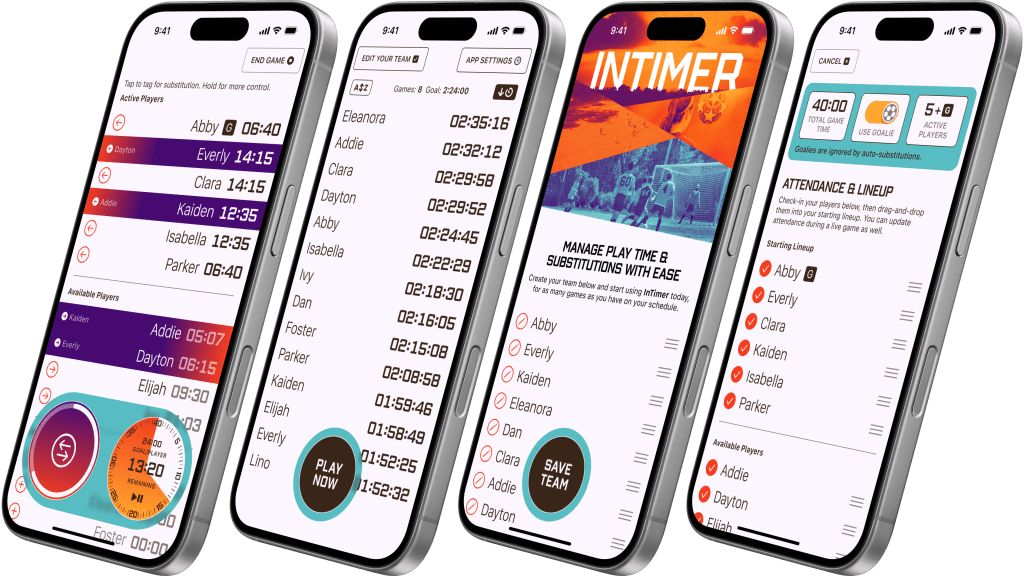
InTimer set out to deliver a simple, intuitive solution that would level the playing field for new, young athletes to fall in love with the game. By blending tracking technology with roster organization, InTimer is transforming the way equitable playing time is tracked and shared, which ultimately allows for better skill development and more individual confidence.
The app’s user-friendly interface and simple analytics have quickly made it a volunteer coach’s ally for fair participation and substitution tracking across a range of youth sports programs, averaging above a 30% subscriber rate.
Through extensive field testing and collaborative feedback with youth sport coaches, the Flatlander team designed InTimer’s UI/UX features to ensure usability during live game environments. In addition to core features and user testing, our team created InTimer’s visual brand system for app store launch and its owned channels.

RESEARCH

STRATEGY

USER EXPERIENCE

DEVELOPMENT

IDENTITY

NAMING

SOCIAL

SEARCH

RETAIL ASO

Designing InTimer at Flatlander Studio
What is the core idea behind creating InTimer, and why is it important?
[Nate Voss, Founder & Managing Partner, Product] InTimer was made because my daughter fell in love with soccer. We very briefly looked at club sports but at her young age — 8 when she started — rec leagues seemed like the better fit. When we signed up, they needed a coach for her team and reluctantly I raised my hand. I was never an athlete growing up but I did play some sports as a kid, and watched a lot of season one Ted Lasso. This and a lot of the coaching education I took led to a foundational idea: at this age, it’s not about skill development, it’s about teaching teamwork and helping them develop a love for the game. There’s a lot to unpack there, but one thing became certain immediately: let the kids play.
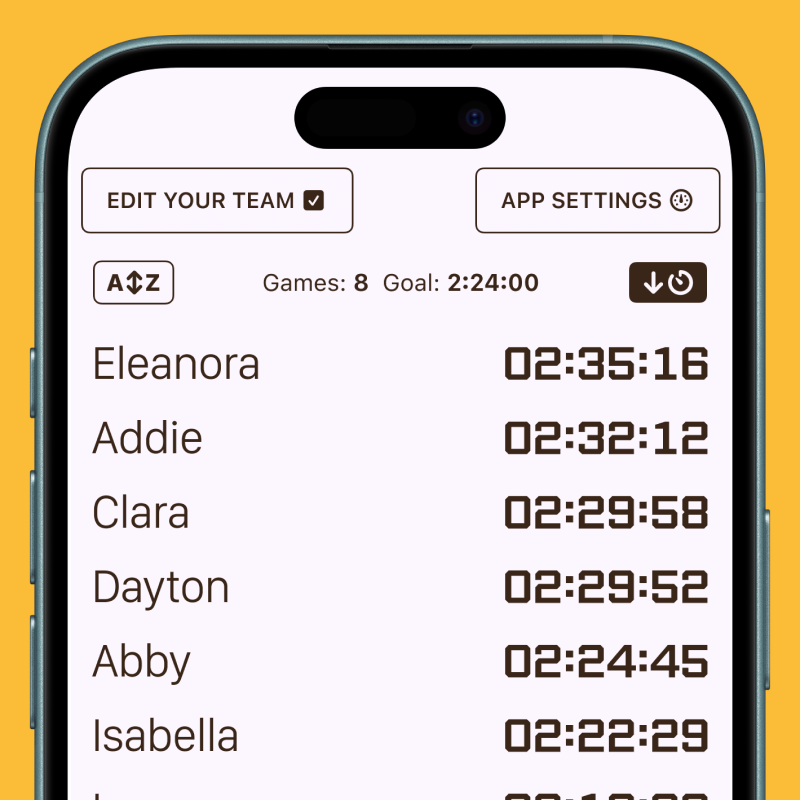
To do that, I wanted to make sure the kids could be on the field as much as possible. That immediately led to a need to keep track of playing time per player, and to do the complicated math of just how much time each kid could play in the time we had per match, and it all become overwhelming really quickly. And there were only a few utility apps out there that helped with this, and none of them were really directly helpful to me.
At the same time we were starting Flatlander Studio, looking for ideas, and the scope and scale of a simple roster manager and playtime calculator was really appealing to us. So we decided, “let’s solve this. Let’s make this easier for volunteer coaches like me.”
What kinds of challenges do volunteer coaches face?
Well especially to new coaches, the experience can be overwhelming. Any team of 6 to 12-year-olds is going to give you a wide range of personalities, emotions, and skill levels — all in different stages of development! Definitely herding cats comes to mind at times. The best thing during practice is to keep them moving. The best thing during games is maybe two-fold: help them understand their role or position, and to just let them play.
One top of that, you’re managing hydration, keeping spirits up, helping with skinned knees and untied shoelaces. Shoelaces are a constant challenge! So as a coach on the sidelines you have a lot to deal with, in the moment-to-moment. It can be really easy to lose track of who’s been playing and for how long which leads to complications: are they tired? Are they thirsty? Are they sitting bored on the sidelines because they aren’t playing?
And, let’s be honest, the parents and families who come to the games want to see their kids play. So that’s a factor, too. Taking playing time from an impossible chore during a loud, live basketball game or soccer match into something that’s almost automatic was a fun problem to solve.
Sounds like a lot to keep track of! How did you design InTimer to solve that problem, then?
Sure. When we first started looking at InTimer we realized a short, focused scope would be an extreme benefit to both us, in our process, and our users in the real world. We’d only need a few things: the ability to enter players onto your team, to set some basic parameters for your games (time, players on the field or court at once, etc), and of course the time-tracking and substitution interface for live games.
There were some complicators around those deliverables that led to a few additional features, such as list sorting and advanced, manual player selection, but the core of Roster + Set-Up + Live Game never changed.
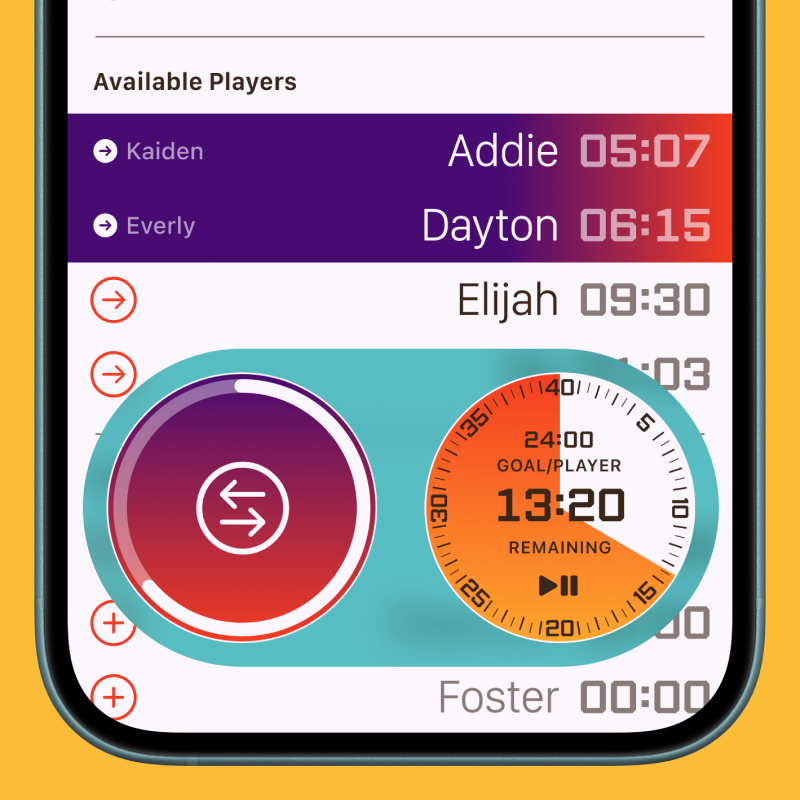
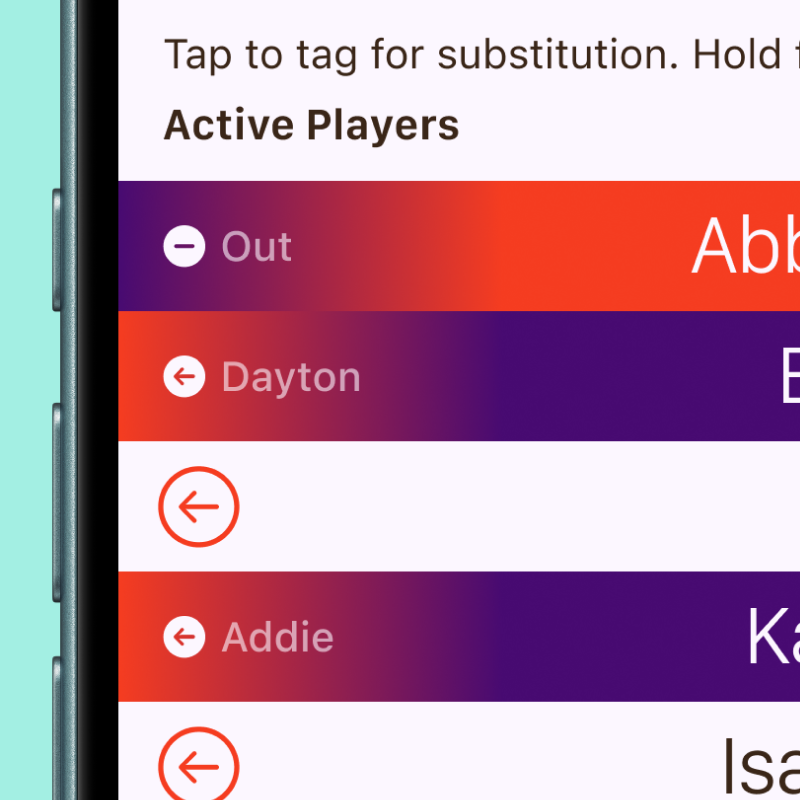
After we identified our core, most of our decisions were around keeping as tight to that as possible. If we could save a user (remember: volunteer parents who need us to make coaching easier for them, not harder!) time at any step, we would. That’s where the auto-selection of substitutes, based on current play-time, came in. Of course you can’t always do it that way — real games are very dynamic situations — so auto-select begat the need for manual selection, which we implemented with a long-touch menu system.
The finishing touch was adding haptics. Live testing revealed a small but critical disconnect — when a coach is doing a substitution, they are interacting with their players, not with their phone. So adding in haptics to respond to taps, holds and confirmations allowed our users to take their eyes off their device before they even finish a process, while still getting the confirmation in their hand that it’s been handled. This was a game-changer, to use the pun.
And how did flatlander Studio build a business model around this idea at the core of InTimer?
We wanted to create something very open and flexible for our volunteer coaches. We set-up lengthy free-trial periods that purposely give enough time for a few weekends’ worth of games to be played before they decide if they want to subscribe. And we deeply discounted the annual plan, versus the monthly. Because coaching rec league or any kind of youth sports, that’s a few months a year, right? Maybe Spring/Fall of Winter/Summer if you’re really engaged. Maintaining a monthly subscription doesn’t make much sense all year round. So we let people decide if they want to stay active with their subs during their seasons, and cancel when they’re off — or just re-up for the whole year at a lower price if they know they will be doing more than one season. We just want to provide that flexibility.
How do you think the players feel about InTimer?
Ha! I hope they never notice it. I hope they enjoy playing their games or matches. I hope they have fun with their teammates. That’s the whole point. There’s an amazing quote from Wayne Goldsmith: “There is no such thing as an elite eight-year-old, a high-performance ten-year-old, or a professional 11-year-old.” At this age, you’re building a connection to sports, exposing children to teamwork, and fostering a love for the game. There’s plenty of time in their teens for kids to learn hard skills and develop talent, but none of them are going do that without an emotional connection to playing their game. They gotta love it. And what we’re doing with InTimer is giving each player an equal chance to love it.

You must be logged in to post a comment.